
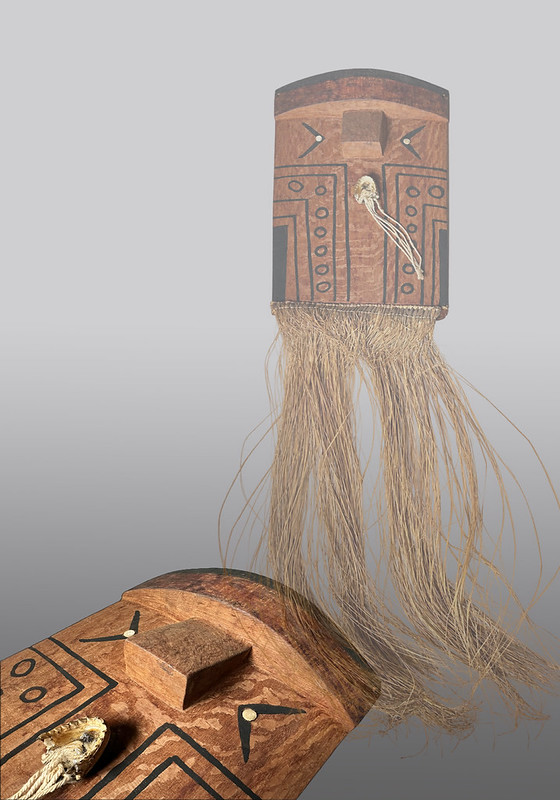
In concomitanza con la pubblicazione del catalogo “Amazzonia, la cultura dell’essere: la collezione Grazia e Alberto Quartapelle, presentiamo presso la Casa degli Artisti di Cosio d’Arroscia una selezione di opere facenti parte della omonima esposizione, visitabile presso i #MagazzinidelMap di Villanova d’Albenga. Per Cosio abbiamo scelto le sculture in legno, alcune maschere ed oggetti caratterizzati da un linguaggio estetico che risulta in sintonia con quelli delle Avanguardie Artistiche del 900, dai Cubisti ai Surrealisti, da cui nacque l’esperienza Situazionista. La connessione tra quei movimenti e i linguaggi estetici Africani ed Oceanici è ormai acclarata e forse banalizzata; l’arte Amazzonica è rimasta più in ombra, eppure parla la stessa lingua formale, segnica, materica, esistenziale; guardando maschere, sculture ed oggetti esposti a Cosio è difficile non pensare a Braque, a Léger – giusto per fare qualche nome- eppure nei primi decenni del Novecento oggetti simili non arrivavano nei bistrot Parigini, alla portata degli artisti. Emerge evidentemente l’evidenza archetipica di un linguaggio universale, che appartiene ad ogni essere umano, da sempre e in ogni luogo; è un linguaggio di immagini che ogni persona pensa e manifesta, a se e agli altri quando sente la necessità di elaborare stati di coscienza, di indagare un Mistero del quale si sente parte.
Non è quindi un caso la nostra scelta di iniziare a fare memoria di #70annidiSituazionismo incardinando questo anniversario sulle culture, anzi sui linguaggi artistici dell’Amazzonia.
Psicogeografia… Derive… Mappe emozionali… Détournement… Ognuno di questi concetti chiave, che il Movimento nato nel 1957 a Cosio d’Arroscia ha posto al centro delle riflessioni culturali e politiche degli ultimi settant’anni, può avere a che fare con quei linguaggi lontani. Linguaggi vivi là dove l’ambiente geografico agisce sulle relazioni affettive; dove camminare senza una meta precisa o un orario, lasciandosi guidare dagli stimoli del luogo e dalle proprie emozioni, è una pratica usuale, come è usuale mappare il territorio — nella memoria, non sulla carta o sul GPS — seguendo i flussi emotivi e le attrazioni psicologiche, anziché le distanze geometriche tradizionali.
Anche decontestualizzare e ricontestualizzare, attraverso le pratiche rituali, gli elementi naturali che agiscono sulla vita quotidiana, per governare le insidie e gli effetti pericolosi del contesto in cui si vive, è, in qualche modo, un détournement. La differenza fondamentale è che quelle azioni, consapevolmente sovversive nella società dello spettacolo e rivolte a un cambiamento radicale, laggiù sono pratiche naturali, in piena sintonia con l’ambiente e con la visione del mondo di chi lo abita. Non sono azioni necessarie a riconquistare la centralità della persona, ma modi di agire da preservare.
Perché? La risposta più adeguata mi pare racchiusa nel titolo del nostro format: in Amazzonia sopravvive la cultura dell’essere; dalla nostra parte del mondo domina quella dell’avere, così giustamente contestata dai Situazionisti in modo originale e creativo.
L’Amazzonia ci testimonia che un altro mondo è possibile. Che la visione Situazionista, o quantomeno la tensione esistenziale che sprigionò e che nessun revisionismo riesce a spegnere, ha una casa: bella, viva, e in pericolo…
Giuliano Arnaldi, Cosio d’Arroscia 6 ottobre 2026
Situationist Amazonia
To coincide with the publication of the catalogue Amazonia, the Culture of Being: The Grazia and Alberto Quartapelle Collection, we are presenting at the Casa degli Artisti in Cosio d’Arroscia a selection of works from the exhibition of the same name, on view at the #MagazzinidelMap in Villanova d’Albenga.
For Cosio, we have chosen wooden sculptures, several masks and objects whose aesthetic language resonates with those of the twentieth-century artistic avant-gardes, from the Cubists to the Surrealists, out of which the Situationist movement emerged. The connection between those movements and African and Oceanic aesthetic languages is now well established, and perhaps even trivialised. Amazonian art has remained more in the shadows, yet it speaks the same language of form, signs, materials and existence. Looking at the masks, sculptures and objects exhibited in Cosio, it is difficult not to think of Braque or Léger—to name just two… Yet, in the early decades of the twentieth century, objects like these were not finding their way into Parisian bistros, within artists’ reach.
What clearly emerges is the archetypal presence of a universal language, one that belongs to every human being, across all times and places. It is a language of images that each person conceives and expresses, to themselves and to others, whenever they feel the need to explore states of consciousness, to investigate a Mystery of which they feel themselves to be a part.
Our decision to begin commemorating #70annidiSituazionismo by grounding this anniversary in the cultures—or, more precisely, the artistic languages—of Amazonia is therefore no coincidence.
Psychogeography… Dérives… Emotional maps… Détournement… Each of these key concepts, which the movement founded in Cosio d’Arroscia in 1957 placed at the heart of cultural and political thought over the past seventy years, can be connected to those distant languages. Languages that thrive wherever the geographical environment shapes emotional relationships; where walking without a fixed destination or schedule, guided by the stimuli of a place and by one’s own emotions, is an everyday practice. Just as it is customary to map the territory—in memory, rather than on paper or GPS—by following emotional currents and psychological attractions rather than conventional geometric distances.
Through ritual practices, taking the natural elements that affect daily life out of their context and placing them in a new one, in order to manage the threats and dangerous effects of one’s surroundings, is also, in a sense, a form of détournement. The fundamental difference is that these actions, consciously subversive within the society of the spectacle and directed towards radical change, are there natural practices, fully attuned to the environment and to the worldview of those who inhabit it. They are not actions needed to restore the person to the centre of life, but ways of acting that must be preserved.
Why? The most fitting answer, I believe, lies in the title of our programme: in Amazonia, the culture of being survives; in our part of the world, the culture of having prevails, so rightly challenged by the Situationists in original and creative ways.
Amazonia bears witness to the possibility of another world. It shows that the Situationist vision—or at least the existential impulse it unleashed, which no revisionism can extinguish—has a home: beautiful, alive, and in danger…
Giuliano Arnaldi, Cosio d’Arroscia, 6 October 2026